Cedar, pine, or steel fence posts
A fence post spends its life with one end in the ground. The Forest Products Laboratory’s Wood Handbook (2021) and a University of Kentucky extension guide explain which wood posts hold up there.
Updated October 2026
Which woods resist rot
The Forest Products Laboratory’s Wood Handbook (2021), Table 14-1, groups woods by how well their heartwood resists decay. Heartwood is the older wood at the center of the trunk, while sapwood is the outer layer. The table places cedars, including western redcedar and eastern redcedar, and junipers in the resistant group, and pines other than a few listed types in the slightly or nonresistant group.
The table’s footnote says decay resistance may be less in contact with the ground and in warm, humid climates. The same handbook says untreated sapwood of essentially all species has low resistance to decay.
| Wood | Group |
|---|---|
| Cedars, including western redcedar and eastern redcedar, and junipers | Resistant |
| Pines, other than a few listed types | Slightly or nonresistant |
| Untreated sapwood of nearly any species | Low resistance |
Cedar posts
The Wood Handbook (2021) says that where decay is a hazard, heartwood of a resistant species generally gives satisfactory service above ground. Ground contact generally calls for a very resistant species, and species in the lower groups usually need preservative treatment.
It describes western redcedar as lightweight, moderately soft, and low in strength when used as a post. Eastern redcedar heartwood is very resistant to decay, and most eastern and southern redcedar is used for fence posts. The handbook also notes that wood from old-growth trees of naturally resistant species is often more decay resistant than second-growth wood.
Pine posts and treated wood
The Wood Handbook (2021) says fence wood exposed to weather, especially in ground contact, needs preservative treatment against rot and termites unless it’s naturally decay resistant. Its summary of the American Wood Protection Association’s use categories places fence pickets and rails under UC3B (above ground, fully exposed) and fence posts under UC4A (general ground contact).
A 2003 University of Kentucky extension guide says properly treated and installed pine fence posts can last 20 to 35 years. It gives untreated pine posts 3 to 7 years.
Galvanized steel posts
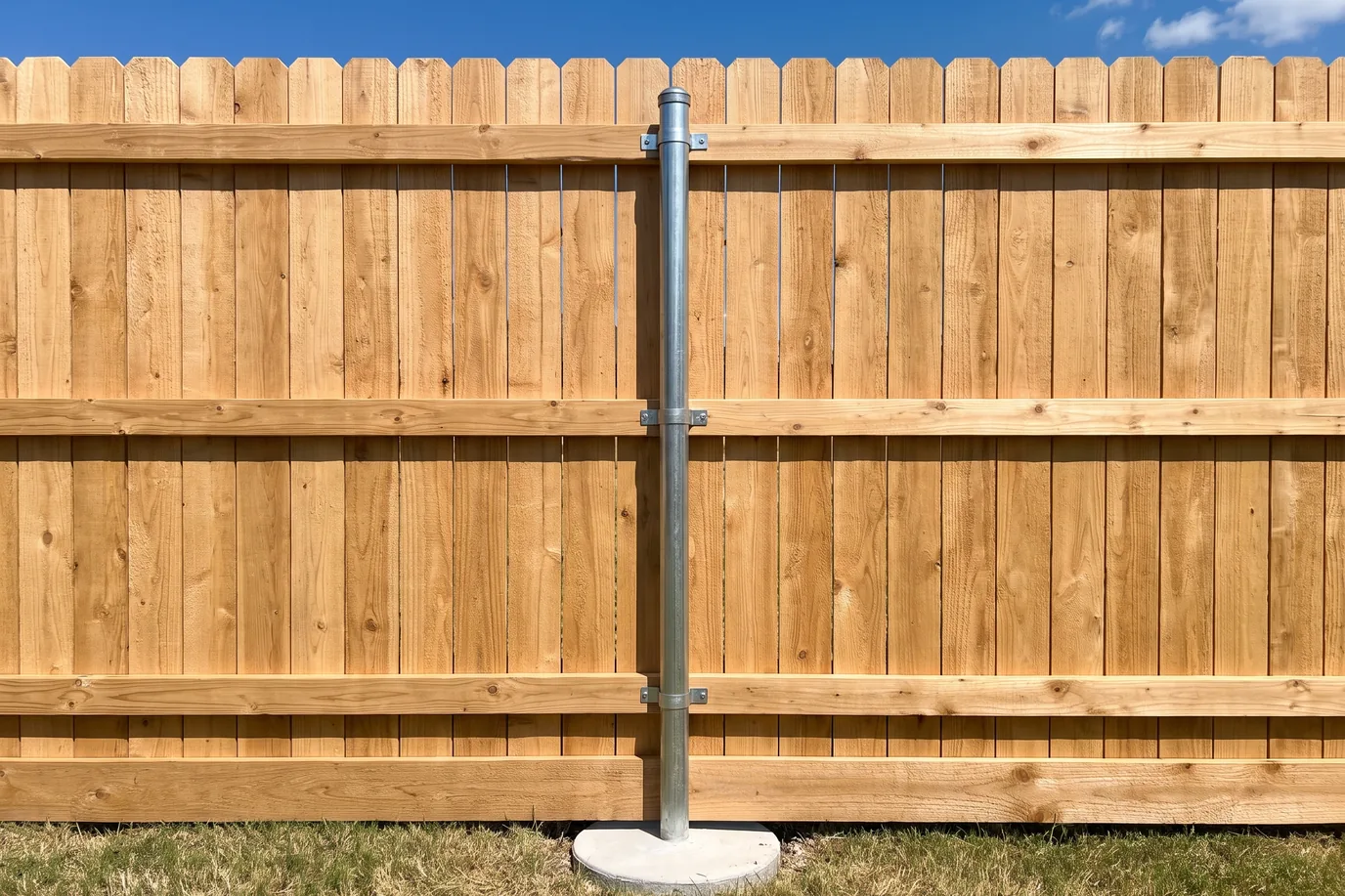
Galvanized steel doesn’t rot, so wood decay groups and preservative treatment categories don’t apply to it. On a privacy fence, the wood rails attach to steel posts with brackets. The pickets and rails are still wood, and they still weather.
Where a post fails first
A University of Kentucky extension guide (2003) says untreated or dip-treated posts first rot at the ground line, where water and air combine best for fungi. The Wood Handbook (2021) calls for caution when using naturally durable woods in ground-contact applications.
Sources
- Forest Products Laboratory, Wood Handbook: Wood as an Engineering Material, FPL-GTR-282 (2021)Decay resistance, treated wood, and finishing
- University of Kentucky Cooperative Extension, FORFS 03-05, Installing Wood Posts for Greatest Longevity in Farm or Paddock Fencing (2003)Treated and untreated pine post life
Questions people ask
Is cedar or pine better for fence posts?
The Wood Handbook (2021) places cedar heartwood in the resistant group, while most pine is slightly or nonresistant and needs preservative treatment. The handbook adds that ground contact generally calls for a very resistant species and that resistance may be lower in the ground.
What does ground-contact treated mean?
Ground-contact treated wood is sold by use category from the American Wood Protection Association. The Wood Handbook’s summary (2021) lists fence posts under UC4A, general ground contact.
Do steel posts work with a wood fence?
Yes, steel posts work with a wood fence. For cedar privacy fences built with steel posts, the wood rails attach to the posts with brackets, and the pickets fasten to the rails.