Wood and steel gates
We build and hang wood and steel walk gates, double drive gates, and ranch gates to match the fence. We also repair gates that sag, drag, or won’t latch.
Walk gates
A walk gate sits in the fence line on its own posts set in concrete. We build them with cedar pickets on a wood or steel frame, or with steel or chain link to match the fence. Each gate has heavy hinges and a latch.
Double drive gates
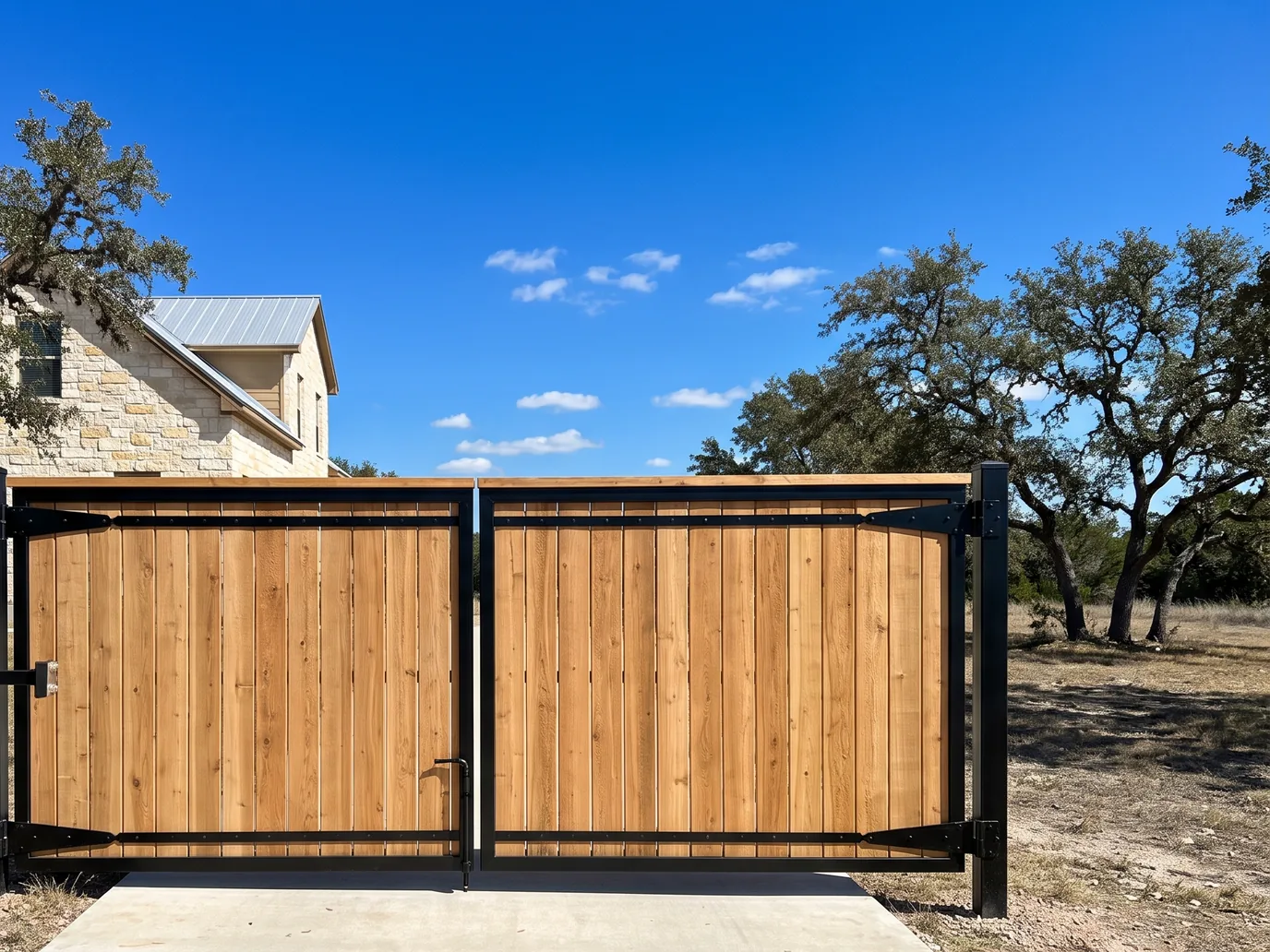
A double drive gate has two leaves that meet in the middle of the driveway. A drop rod on one leaf drops into a hole in the drive or the ground to hold that leaf shut. The other leaf latches to it.
Ranch gates
We hang pipe and wire ranch gates on acreage. They go in braced openings as part of our ranch fencing work.
Hinges, latches, and drop rods
A gate pulls on its hinge post every time it swings. We use heavy hinges, a hinge post set in concrete, and a latch that lines up. On a double gate, a drop rod holds one leaf shut.
Gate repair
We repair wood and chain link gates that sag, drag on the ground, or won’t latch. We rehang the gate and reset or replace the hinge post. We also replace worn hinges or latches.
What gates cost
Angi’s national fence installation page, updated October 13, 2026, lists gates at $150 to $2,000. Our guide to what a fence costs in Austin has more published figures.
Questions about gates
Why does a gate start to sag?
A gate starts to sag because the weight of the leaf pulls on the hinge post and hinges every time it swings. When the post leans or the hinges loosen, the latch side drops.
Can you add a gate to the fence I have?
Yes, we can add a gate to the fence you have. We cut the opening, set a post in concrete on each side, and hang a gate to match.
How far back does a driveway gate have to sit?
Under Texas Property Code § 202.023, an HOA can require a driveway gate to sit at least 10 feet back from the right-of-way where the driveway meets a laned roadway. Check your HOA’s rules and your city’s. For HOA information, see HOA and fence rules.